
Surfing in Nosara for Beginners: Everything You Need to Know Before You Paddle Out
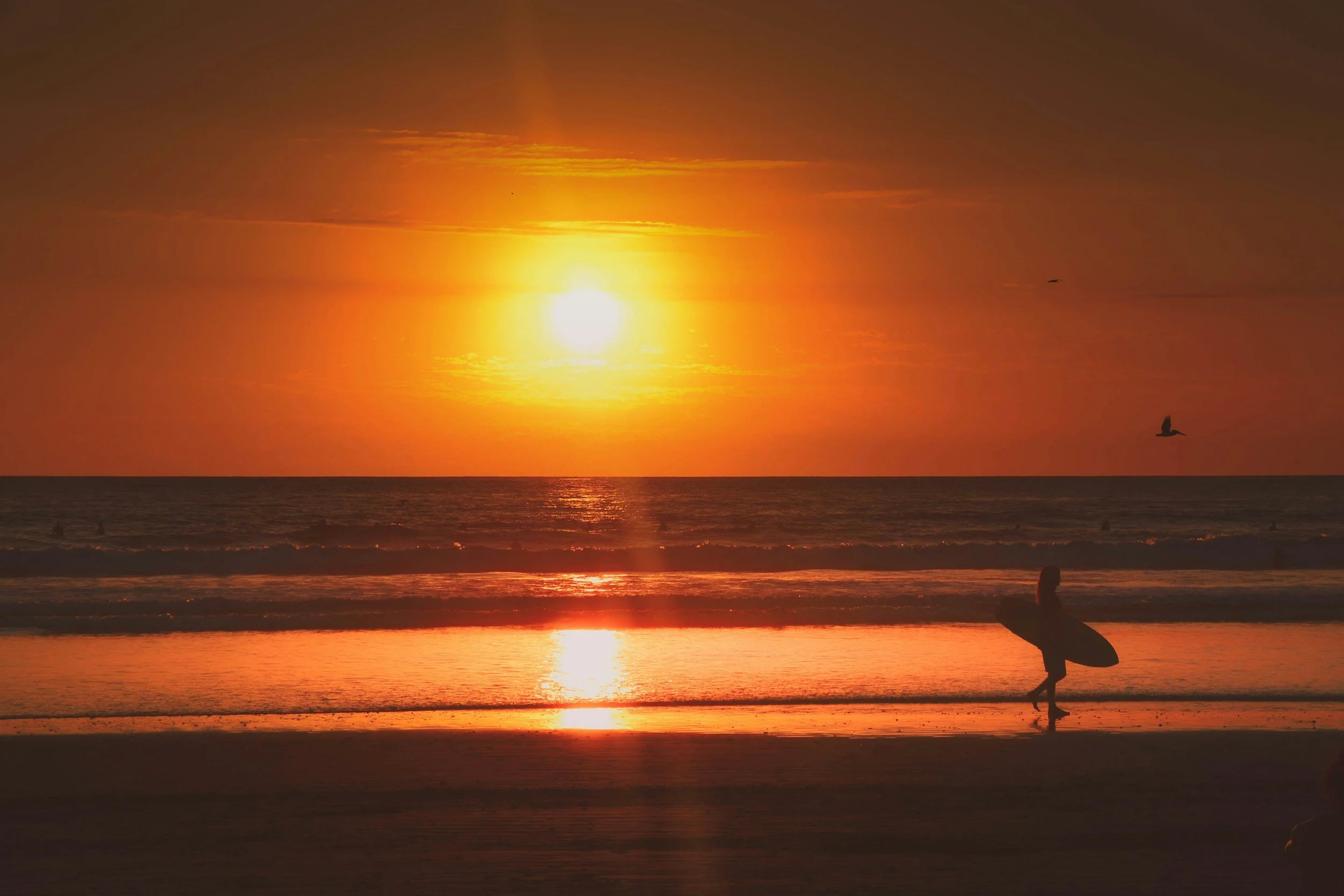
There are few things that feel more quintessentially Nosara than carrying a surfboard down the sandy road to Playa Guiones, paddling out into the warm Pacific, and—hopefully—standing up on your first wave.
If you've never surfed before, though, the idea can be a little intimidating. Which beach should you go to? What kind of board should you use? Does the tide matter? How big is too big? And do you really need a surf lesson?
The short answer to that last question is yes.
The good news is that Nosara is an excellent place to learn. Playa Guiones offers a long stretch of sandy beach, consistent surf, plenty of space, and numerous experienced surf schools and instructors. But a little preparation can make your first experience much more enjoyable—and much safer.
Here's what beginners should know before surfing in Nosara.
Is Nosara Good for Beginner Surfers?
Absolutely!
Playa Guiones is Nosara's main surfing beach and is where you'll find most beginner surf lessons. The long beach and multiple peaks mean there is plenty of room to spread out, and the sandy bottom is much more forgiving for beginners than a rocky or reef break.
There is also a huge range of surf conditions throughout the year. On a mellow day, a beginner can spend time practicing in the whitewater and gradually work toward catching unbroken waves. On a bigger-swell day, those same waves can become much more challenging.
That's one of the reasons local knowledge matters so much.
Take a Surf Lesson—Even If You're "Pretty Athletic"
If you've never surfed before, we strongly recommend taking at least one lesson.
And no, it's not because you need someone to teach you how to stand up on a board. That's only one small part of learning to surf.
A good instructor can teach you how to:
Choose the right board for your ability
Position yourself on the board
Paddle efficiently
Time your takeoff
Read incoming waves
Recognize currents and potentially dangerous conditions
Know where you should—and shouldn't—be sitting in the water
Understand basic surf etiquette
Fall safely
Get back out through the waves
That last part is especially important. Surfing isn't just about what happens when you're riding a wave. Knowing how to navigate the ocean is a huge part of being a safe surfer.
Your instructor can also look at the conditions that day and choose an appropriate section of beach and time for your lesson. That's something a weather app can't necessarily tell you.
Most beginner lessons in Guiones are around 90 minutes, although the exact format varies between schools. Some include boards and rash guards as part of the lesson.
And don't worry if you feel ridiculous during your first lesson. You will fall. A lot.
That's normal.
Guiones or Pelada: Where Should a Beginner Surf?
If this is your first time surfing, start with Playa Guiones.
Playa Pelada is gorgeous and absolutely worth visiting, but it isn't necessarily the easiest place to learn. Its rocky sections and different wave characteristics mean that conditions can be less forgiving for someone who is still figuring out the basics.
Guiones is the classic choice for beginner lessons because of its long sandy beach, multiple surf zones, and abundance of instructors.
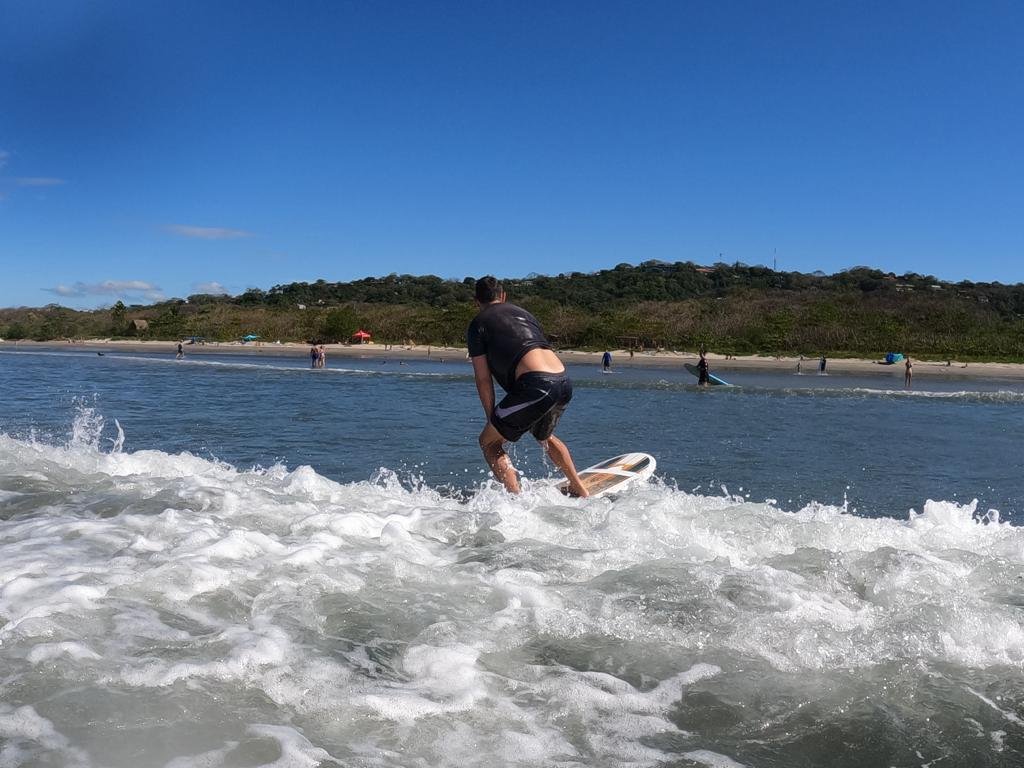
When Should You Go Surfing?
This is one of the questions beginners often overlook.
You can't simply choose a surf time because it fits nicely between breakfast and lunch. The ocean has its own schedule.
Pay attention to the tide
The tide can change how and where waves break. There isn't one magic tide that guarantees perfect beginner waves every day—the tide interacts with the swell, wind, and conditions at that particular time.
In general, mid-tide and a rising tide can provide favorable conditions at Guiones, while very low tide can make some waves break more abruptly and in shallower water. Your surf instructor will take the day's conditions into account when deciding when and where to surf.
If you're booking a lesson, let your instructor worry about the tide.
That's one of the advantages of taking a lesson in the first place.
Look at the wave height—but don't stop there
A forecast might tell you that the waves are two feet, three feet, or six feet, but that number doesn't tell the whole story.
Two-foot clean, gently rolling waves can feel completely different from two-foot waves that are breaking hard and choppy.
Wind direction, swell period, tide, and the shape of the waves all matter.
If you're new to surfing, don't feel like you need to become a surf-forecast expert before your vacation. Start by learning what the conditions mean, then ask a local instructor whether the day's surf is appropriate for your ability.
Morning Surfing Is Often Your Friend
You'll often hear surfers talk about getting in the water early, and there is a reason.
Mornings in Nosara can have lighter winds and cleaner wave faces before the day's wind picks up. Later in the morning, onshore winds can create more texture and chop on the water.
That doesn't mean you have to drag yourself out of bed at 5:00 a.m. to learn to surf.
But if you're choosing between an early-morning lesson and an afternoon session, the morning is often the safer bet for cleaner conditions.
And there is another advantage:
You get your surf session finished before the heat of the day really kicks in.
Know When Not to Surf
This might be the most important section of the entire article.
Nosara's beaches can look deceptively inviting. The water is warm, the sun is shining, and from the beach everything can look perfectly calm.
But ocean conditions can change quickly.
Pay attention to warning flags and local safety information.
Red-flag conditions indicate a high level of danger, and they are not the time for a beginner to decide, "I'll just go out for a quick one." Double red flags mean the water is closed.
Rip currents are another important concern at beach breaks. A surf instructor can teach you what to look for and what to do before you ever paddle out.
What Should You Wear Surfing in Nosara?
The water in Nosara is warm enough that you don't need a wetsuit.
What you do want is protection from the sun—and from your surfboard.
A rash guard is one of the best things you can bring. It helps protect your shoulders and back from the tropical sun while also reducing the amount of rubbing and chafing you get from lying on a surfboard.
A fitted T-shirt can work in a pinch, too.
You'll also want:
Water-resistant sunscreen
Plenty of sunscreen on your face, ears, neck, and the backs of your legs
A swimsuit or board shorts that stay securely in place
Plenty of water
A hair tie if you have long hair
What Kind of Surfboard Should a Beginner Use?
Here's a very simple rule:
Start with a big board.
The shortboards look cooler.
They are also much harder to learn on.
A beginner-friendly longboard or soft-top gives you more stability and flotation. That makes it easier to paddle, catch waves, balance, and get to your feet.
A shortboard is smaller, more maneuverable, and designed for a different style of surfing—but those advantages are much more useful once you've developed some basic skills.
Surfing is a Great full-body Workout
Surfing can look deceptively relaxing from the beach.
Then you try it.
Paddling alone is a workout, and you're also constantly using your legs, core, arms, shoulders, and back to balance and control your board. Add in repeatedly getting knocked off, getting back on, paddling back out, and trying to stand up over and over again, and it's no surprise that a first surf session can leave you exhausted.
Surfing combines cardio, strength, balance, coordination, and flexibility.
What About Kids?
One of the fun things about surfing in Nosara is that kids can often pick it up surprisingly quickly.
Little kids have some natural advantages when it comes to balance. They're small, lightweight, and often much less concerned about looking silly than adults are.
Once they're on an appropriately sized board with an instructor helping them, some children can get the hang of the basic motion surprisingly quickly.
And kids tend to approach the whole experience differently.
A five-year-old will fall, laugh, climb back on the board, and immediately demand to do it again.
That said, children should still be matched with an instructor and conditions appropriate for their age and ability.
For families visiting Nosara, a surf lesson can be a fantastic way for kids to experience the beach in a completely different way.
Don't Worry About Being Bad at Surfing
This may be the most important advice we can give you.
You are going to be bad at surfing when you first start.
You'll probably fall 10 times in a row while trying to stand up. You'll probably paddle for a wave and miss it. You may stand up for half a second and immediately fall back into the water.
Then, eventually, you'll catch one.
And when you do, you'll understand why people become completely obsessed with surfing.
You don't need to stand perfectly. You don't need to ride all the way to the beach. You don't need to look graceful.
Your first goal is simply to catch a wave and have fun.
Everything else comes later.
A Few Final Tips for Your First Surf in Nosara
Before you head down to Playa Guiones, remember:
Take a lesson. Even confident swimmers and athletic people can benefit enormously from having someone teach them how to read and navigate the ocean.
Start with a bigger board. Stability is your friend.
Go with the conditions, not against them. If the surf is too big or messy for your ability, wait for a better day.
Protect yourself from the sun. Rash guards and sunscreen aren't optional luxuries in the Costa Rican sun.
Listen to local instructors. They know the beach, the waves, and the conditions.
Respect other surfers. Learn the basics of surf etiquette before you start paddling into crowded areas.
Don't take yourself too seriously. Falling is part of surfing. Everyone does it.
And most importantly:
Have fun.
Ready to Try Surfing in Nosara?
Whether you're ready for your very first surf lesson or you're already comfortable on a board, we can help you arrange it.
We can help you book a surf lesson with a local instructor, arrange board rentals for more experienced surfers, or help you find the right surfing experience for your group. Just tell us a little about your trip and what you're looking for, and we'll point you in the right direction.
Planning Your Trip to Nosara?
Surfing might be one of the reasons you're coming to Nosara, but there's a lot more to figure out once you start planning your trip. These guides can help you get started:
Where to Stay in Nosara — Not sure whether Guiones, Pelada, or another area is right for you? Start here before booking your accommodation.
Playa Pelada vs. Playa Guiones — Compare the two beach areas and see which one fits your trip better.
What to Do in Nosara — Our guide to beaches, surfing, waterfalls, wildlife, adventure activities, and more.
Do You Need a Car or ATV in Nosara? — Learn how to get around and which transportation option makes the most sense for your trip.
What to Do in Nosara With Kids — Traveling with children? Find family-friendly activities and practical tips for making your trip easier.
And if you'd rather not figure everything out yourself, we can help with that, too. From surf lessons and activities to transportation and local recommendations, tell us what you're planning and we'll help you put the pieces together.